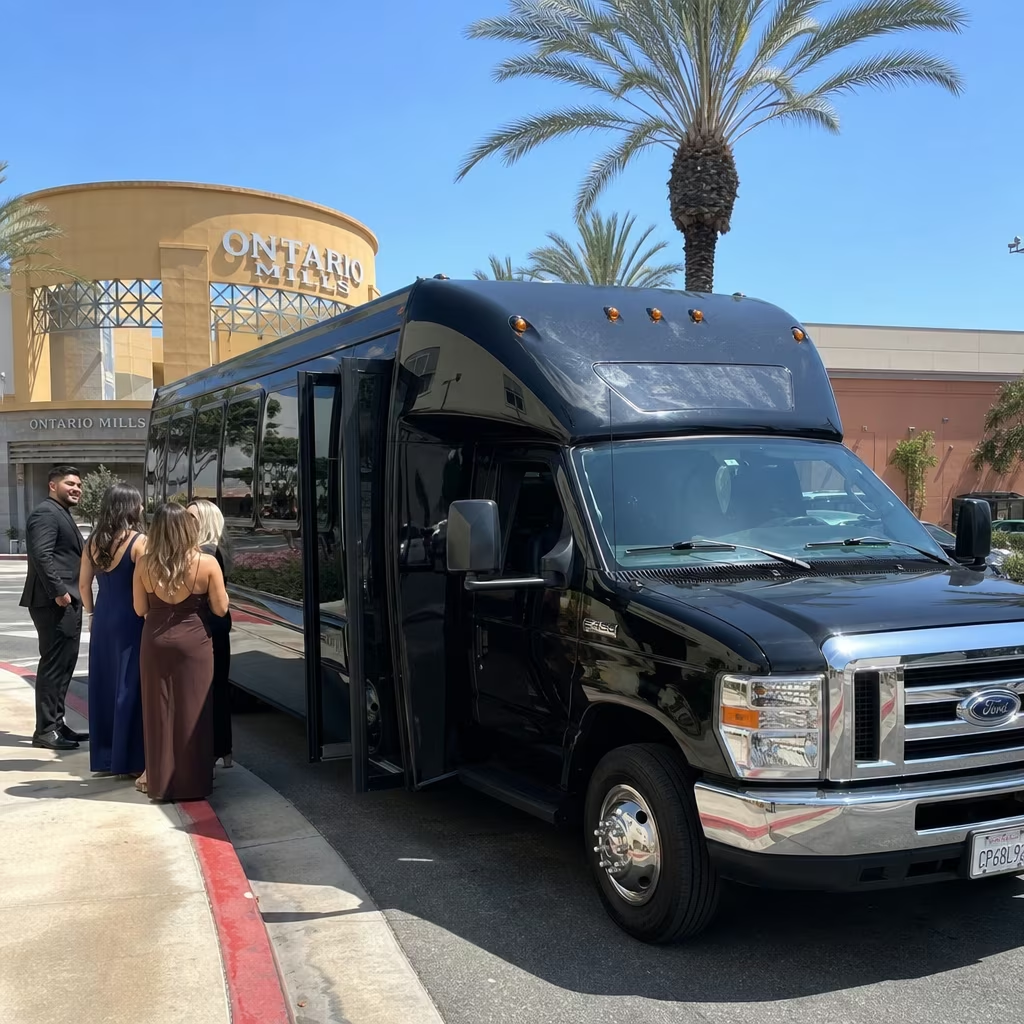
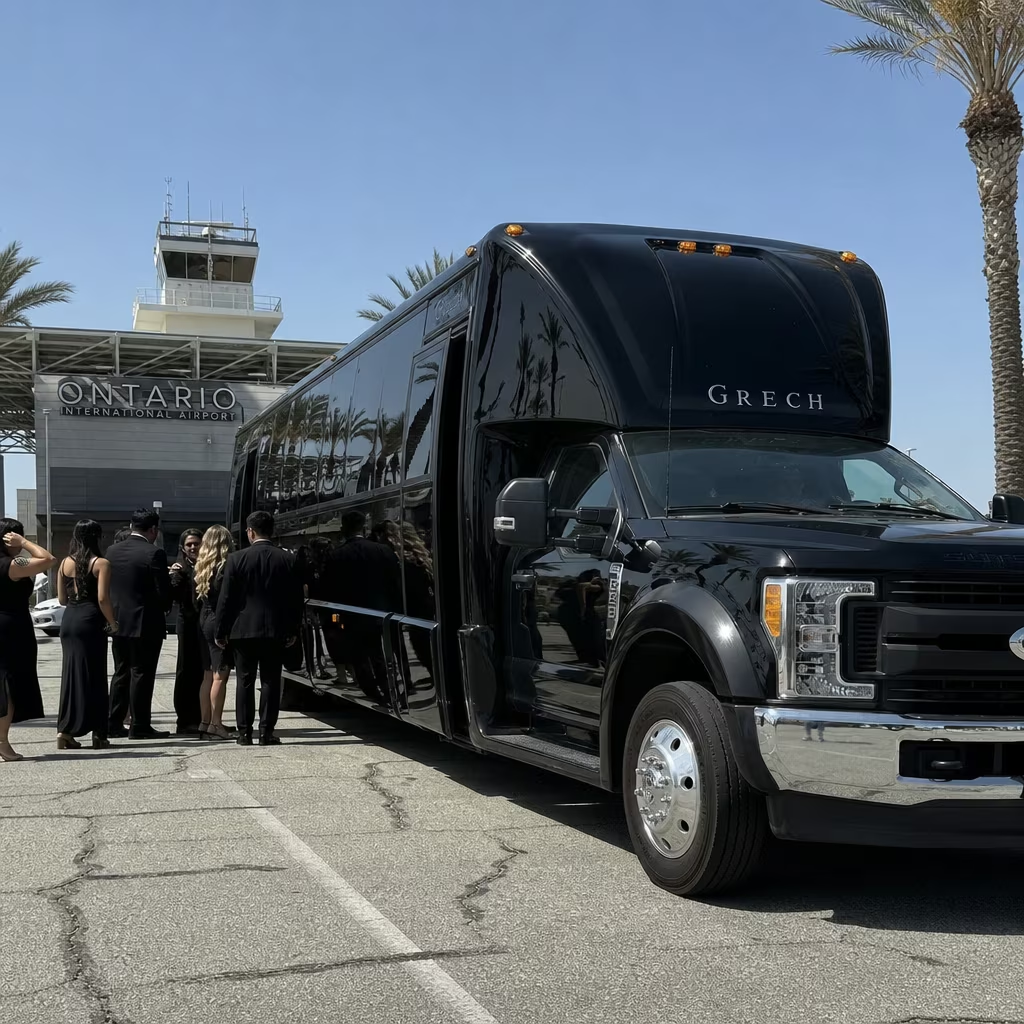
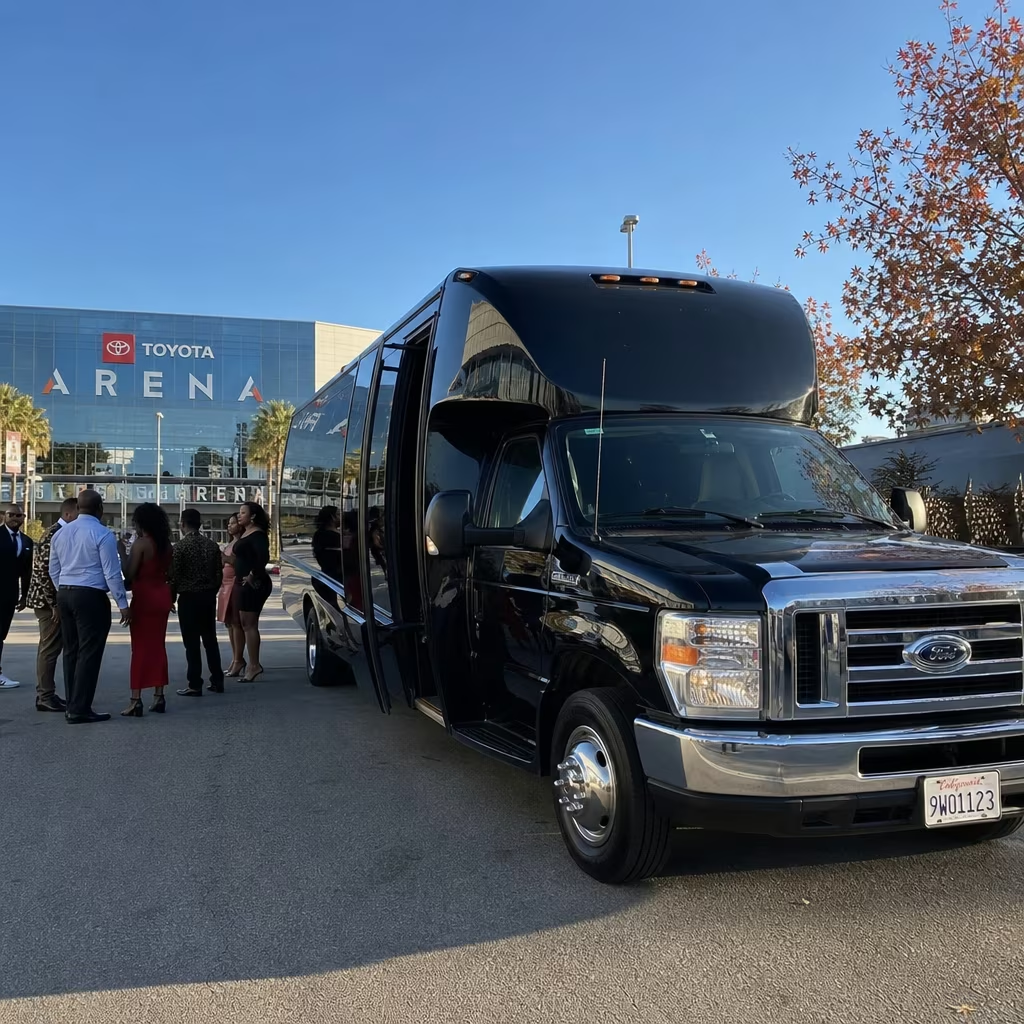
If you are organizing a group trip to Big Bear Lake, the first question that comes up before everything else is not which cabin to book or which trails to hike — it is how you get 20, 30, or 50 people up a mountain in winter without someone's sedan sliding sideways on SR-330. The highway climbs nearly 6,000 feet in under 30 miles, chain controls can close the road to unprepared vehicles on any given storm day, and the parking situation at Snow Summit on a powder Saturday is every bit as chaotic as the slopes. A private bus rental in Fontana takes care of all of it before you even pack your gear bag.
This guide is the one most trip planners actually need: the real routes, the specific drop-off zones at Snow Summit and Bear Mountain, what happens when chains are required, how the Big Bear Trolley fits into a ski-day plan, the event calendar that drives demand and fills every available vehicle, and exactly what to budget before you commit. Party Bus Fontana runs this corridor — Fontana, the Inland Empire, and the LA basin up to Big Bear Lake — regularly, so the detail below comes from doing it, not from a resort brochure.
From Fontana to Big Bear Lake
~49 miles · ~1 hr 5 min off-peak via I-10 E to SR-330 N
Snow Summit base parking
880 Summit Blvd, Big Bear Lake, CA 92315
Bear Mountain base parking
43101 Goldmine Drive, Big Bear Lake, CA 92315
Daily oversized vehicle parking
$75/day at BBMR on peak & holiday dates
Big Bear Trolley (Red Line)
Free — runs from The Village to both ski bases
Oktoberfest 2026
Weekends Sept 19 – Nov 25 · Saturdays 1 PM – 11 PM
The Real Route From Fontana and the Inland Empire
From Fontana, the standard route is I-10 East to the CA-210 East connector in San Bernardino, then CA-330 North out of Highland. Highway 330 — officially the Rim of the World Highway — is the climb that separates a Big Bear road trip from everything else. In 30 miles you gain roughly 5,000 feet of elevation through tight switchbacks, 25 mph advisory zones, and a parade of brake lights on busy weekends.
The road is spectacular. It is also the exact stretch where an unprepared motorist, a two-wheel-drive sedan, and the first major snowstorm of the season converge into a three-hour parking lot.
That congestion on SR-330 is one of the most predictable friction points in Southern California winter driving, and it is also one of the clearest arguments for a bus rental. Your group consolidates into one vehicle, chain requirements apply once instead of per-car, and someone else handles the driving while everyone else watches the mountain go by from their seat.
From Los Angeles, the numbers shift slightly: roughly 100 miles and a 2-to-2.5-hour drive under normal conditions, via the I-10 or I-210 to SR-330. From Riverside and San Bernardino — the center of the Inland Empire — Big Bear is even closer, with a run often under 90 minutes off-peak. The table below gives honest estimates for several common starting points:
| Starting point | Approx. distance | Off-peak drive time | Ski Saturday estimate |
|---|---|---|---|
| Fontana | ~49 miles | ~1 hr 5 min | 1.5–2.5 hrs |
| San Bernardino | ~45 miles | ~55 min | 1.5–2 hrs |
| Riverside | ~65 miles | ~1 hr 20 min | 2–3 hrs |
| Los Angeles (downtown) | ~100 miles | ~2 hrs | 2.5–4 hrs |
| Long Beach | ~95 miles | ~1 hr 55 min | 2.5–3.5 hrs |
| Anaheim / Orange County | ~95 miles | ~1 hr 50 min | 2.5–3.5 hrs |
Times are estimates under normal conditions. Ski Saturdays, storm days, and holiday weekends can double these figures on SR-330 and I-10 East.
The Alternate Routes Worth Knowing
SR-330 through Running Springs is the most direct approach from the Inland Empire, but it is not always the fastest or the only option. Three alternates come up constantly in Big Bear trip planning, and knowing which one fits which situation is genuinely useful:
- Highway 18 through Lucerne Valley (the "back way"). Longer in miles — you come in from the north and east via Victorville — but almost always open during snowstorms when SR-330 is backed up or closed. Chain controls hit SR-330 first; Highway 18 from the desert side is flatter and typically stays clear. Groups coming from Barstow, Las Vegas, or the High Desert use this route exclusively.
- Highway 38 through Redlands. The scenic option — it runs along the Santa Ana River Canyon and connects to Big Bear from the south. About 20 minutes longer than SR-330 but usually less congested. No steep switchbacks, which matters if your group includes anyone prone to car sickness on tight mountain curves.
- SR-330 through Running Springs (primary route). Fastest from the Inland Empire and LA when roads are clear. Congested on ski Saturdays starting as early as 6 AM.
The Big Bear driving reality: on a clear Friday in June, the trip from Fontana is about an hour. On a powder Saturday in January after a midweek snowfall, that same road is a three-hour crawl with chain controls active at the checkpoint on SR-330 near Running Springs. A charter bus from Fontana or the Inland Empire doesn't avoid that traffic — but it does mean 30 people share one set of tires and one chain-compliance headache instead of multiplying it across eight separate cars.
Chain Controls and Winter Driving: What Your Group Needs to Know
Chain controls are the detail most Big Bear trip guides treat as a footnote. They are not. When CalTrans activates R2 controls on SR-330, every vehicle that is not a four-wheel or all-wheel drive with snow-tread tires on all four wheels is required to have chains installed before passing the checkpoint.
When R3 controls go active, chains or traction devices are required on all vehicles with no exceptions. Violating chain control — trying to pass without compliance — can result in a fine and being turned back down the mountain.
For a group traveling in eight separate personal vehicles on a storm day, R2 controls are a logistical nightmare: different cars with different drivetrain configurations, different people who have never installed chains before, a checkpoint line that can stretch a mile, and the very real possibility that one car in the group fails inspection and the whole caravan scatters. For a properly equipped charter bus with an experienced crew on this route, that checkpoint is one stop, not eight.
Chain control status changes quickly. Before any winter trip, check CalTrans road conditions and the Big Bear Mountain Resort's real-time road condition updates — both will show you active R-levels on SR-330, SR-18, and SR-38. One more note on timing: as of early 2026, Highway 38 has operated under weekday closures (7 AM–5 PM, Monday through Friday) due to construction, with the route open evenings and weekends.
Confirm current status on CalTrans before routing your trip that way.
Where Your Bus Drops Off at Snow Summit and Bear Mountain
Here is the part most rental pages leave vague — and the detail that makes or breaks your morning at the slopes.
Big Bear Mountain Resort operates two ski areas under one umbrella: Snow Summit (880 Summit Blvd, Big Bear Lake, CA 92315) and Bear Mountain (43101 Goldmine Drive, Big Bear Lake, CA 92315). Each has its own base area, its own parking lots, and its own drop-off zone for arriving vehicles. The resort designates guest drop-off zones at both mountains — follow the orange signs and turn on hazard lights when pulling in, and follow posted staff instructions, because traffic patterns at the lots on busy days may differ from what GPS routes you toward.
The drop-off logistics at each base work as follows:
- Snow Summit: The base is off Summit Blvd. Parking is organized in upper and lower lots; the guest drop-off zone is closest to the lodge and lift area. On high-traffic days, resort staff direct vehicles into specific lanes, so follow their signals over your GPS routing once you're in the lot area.
- Bear Mountain: Access is via Goldmine Drive off Big Bear Blvd. The base lot is more compact; the drop-off zone is at the base lodge. Both mountains are connected by the Intermountain Shuttle, which runs between the two bases on select dates — so your group can start at Snow Summit and hop to Bear Mountain mid-day without needing to move the bus.
One detail that first-timers consistently miss: daily oversized vehicle and RV parking at BBMR runs $75 per day on peak and holiday dates, versus $25–$40 for regular-sized vehicles. The math changes fast when you're comparing that single $75 charge against a caravan of eight cars each paying $40. One bus, one fee, everyone's skis in the same undercarriage bay.
We recommend checking the official BBMR parking page before your visit to confirm current rates and lot availability, since lot status updates in real time and premium passes for the 26/27 season sell out within days of their release date.
The Big Bear Trolley and How It Fits Into Your Group Day
Once your bus drops the group in town, the Big Bear Trolley — Mountain Transit's Red Line — runs from The Village at Big Bear Lake to both Snow Summit and Bear Mountain, and it is free. This matters for groups staying in cabins near The Village or arriving early enough to park in one of the city's five free public lots near downtown. The city recommends arriving before 9:30 AM on busy weekends to claim a free lot space, and the trolley runs from that area directly to the ski base areas.
For groups that want the bus to handle the Fontana-to-Big Bear leg and then use the trolley for the ski-day circulation, that handoff works cleanly.
The trolley also runs during Big Bear Lake Oktoberfest weekends, shuttling festival-goers around town when The Village and event parking areas fill up. During those evenings — Saturdays until 11 PM — the trolley is one of the more useful tools for keeping a large group mobile and together without anyone needing to be sober-designated.
For full trolley schedules, the Mountain Transit website has current route maps and seasonal hours. Schedules shift between winter and summer, and some routes run on reduced frequency outside peak season.
What Size Bus Fits Your Big Bear Group?
The right vehicle for Big Bear is the one that fits your group without surplus empty seats — and that also handles whatever gear your trip requires. Ski trips mean boots, helmets, poles, and board bags. Summer camping groups bring coolers, mountain bikes, and hiking gear.
Corporate retreats often travel light with just luggage. The vehicle you choose should match both the headcount and the load.
| Vehicle | Typical capacity | Luggage & gear | Best for |
|---|---|---|---|
| Sprinter van | Up to ~14 | Modest — carry-ons and a few ski bags | Small families, small corporate groups |
| Minibus (15–35 passengers) | ~15–35 | Good — overhead plus some underfloor | Mid-size ski trips, church groups, cabin weekends |
| Party bus (15–50 passengers) | ~15–50 | Onboard, lighter storage | Celebration trips, Oktoberfest groups, birthday weekends |
| Full-size charter bus (40–56 passengers) | Up to 56 | Excellent — large undercarriage bays | School field trips, large ski clubs, corporate retreats |
For ski trips specifically, a full-size charter bus earns its keep in the undercarriage bays. Ski bags, snowboard bags, boot bags, and a helmet for everyone in the group stacks up fast. A 40-passenger group with a board apiece fills more trunk space than most groups expect, and a minibus with overhead storage only handles carry-on-sized gear.
If gear is your variable, size up rather than down. ADA-accessible vehicles are also available — just let our team know ahead of booking so the right vehicle is arranged.
What a Big Bear Bus Rental Costs
Charter bus pricing for a Big Bear trip is quote-based, not a flat sticker number — and any honest answer includes the factors that actually move the price. For a Fontana or Inland Empire group heading to Big Bear, here is what shapes your quote:
- Vehicle size. A 56-passenger charter bus and a 14-passenger Sprinter are different rates. You only pay for what you need.
- Total hours. The drive up, time at the mountain or in town, and the drive back — all of that is the block of reserved hours. A day trip from Fontana with a 10 AM arrival and 5 PM return runs roughly 8–10 hours total.
- Date and season. Winter ski weekends and Oktoberfest Saturdays cost more than a summer Tuesday. The busier the date, the tighter availability gets.
- Mileage and route. A Fontana pickup is a shorter run than an origin in Long Beach or central Los Angeles.
For real ranges: Sprinter vans run roughly $170–$344/hour; minibuses (15–35 passengers) run $150–$300/hour; party buses (15–50 passengers) run $200–$490/hour depending on size; and full-size charter buses run $150–$300/hour or $1,200–$2,500/day. The per-person math is where the bus consistently wins: split a day-trip charter across 40 people and you are often looking at $40–$75/person — comparable to or less than coordinating separate gas, parking, and chain-rental costs for eight cars, and without the SR-330 stress landing on any individual in the group.
Party Bus Fontana offers all-inclusive pricing online in under 30 seconds — you will know the exact figure before you ever book. Call 323-380-3985 any time for a free quote, or use our online tool for instant availability.
The Big Bear Event Calendar: When Buses Fill Up First
Big Bear Lake draws groups all year, but six windows account for the majority of charter demand — and the majority of the situations where waiting too long means no vehicle left at the right price.
Winter Ski Season (December – March)
Snow Summit and Bear Mountain open for the ski season typically in late November or December, weather permitting, and run through March or early April. This is by far the busiest transportation period of the year. The first powder weekend after a significant storm triggers the biggest demand spikes — that is the Saturday when SR-330 is stop-and-go from the I-215 junction and every ski club, corporate team, and family reunion converges on the mountain at once.
Inland Empire charter availability compresses fast on those dates. Groups that lock in a bus two to four weeks ahead get the right vehicle at the rate they want; groups that call the Friday before a predicted powder Saturday often find the fleet committed.
Big Bear Lake Oktoberfest (Weekends, September 19 – November 25, 2026)
Oktoberfest at Big Bear Lake is one of the longest-running German festivals in Southern California, running every weekend from mid-September through late November — Saturdays 1 PM to 11 PM, Sundays 12 PM to 6 PM. German beer, bratwurst, stein-holding competitions, live bands, and an Oktoberfest atmosphere at altitude make this the go-to group outing for Inland Empire bars, restaurants, and company events that want something that feels like a destination without a long travel day. The 11 PM Saturday end time is exactly the scenario where a party bus with a designated driver built in is the obvious answer — nobody from your group of 25 is driving back down SR-330 in the dark after an evening at the beer tents.
Book Oktoberfest Saturdays at least 3–4 weeks ahead from Fontana; the September opening weekends fill especially fast with pent-up summer demand converting to fall event traffic.
Big Bear Lakefest (June 28, 2026)
Lakefest is a weekend of trail runs, mountain biking, paddleboard races, and outdoor action on and around the lake. The Paddle Lakefest race on June 28 draws paddlers for 5K, 10K, and 20K distances. Groups traveling for Lakefest with bikes, paddleboards, or race gear need the undercarriage bay capacity of a full-size charter bus — a minibus with overhead storage only handles carry-on loads, not a 12-foot paddleboard.
Big Bear Cycling Festival (July 31 – August 2, 2026)
Three days of road, gravel, and cross-country mountain bike events make Big Bear a hub for cycling clubs, teams, and enthusiast groups every summer. A full charter bus handles bikes in the undercarriage if loaded properly — confirm bike-loading capability when you book, since smaller vehicles don't offer the bay depth needed for full-size road or mountain bikes.
Maifest (May 16, 23, 24, and 30, 2026)
The spring companion to Oktoberfest, Maifest runs on four dates in late May with the same German beer and food format at a lighter scale. Good shoulder-season option for groups that want the Oktoberfest atmosphere without November mountain weather.
Spring Break and Summer Cabin Weekends
March and April bring spring break traffic — families from the LA basin and the Inland Empire filling cabins around the lake for a long weekend. Summer weekends from late June through August see steady demand from groups renting large cabins and wanting a single vehicle to haul everyone from a central pickup point. These are not the scarcity events that ski powder days are, but 6–8 weeks of lead time is still a good practice for summer weekends to get the specific vehicle size and amenities your group wants.
Bus vs. Driving: The Honest Comparison for a Group
A private bus to Big Bear is not automatically the right call for every group. Here is an honest look at how it stacks up.
| Option | Group arrives together? | Chain control hassle | Parking cost | Drinking at Oktoberfest? | Best for |
|---|---|---|---|---|---|
| Private charter bus | Yes — one vehicle | One compliance check | $75 oversized/day at BBMR | Yes — route handled for you | 12–56 passengers |
| Multiple personal cars | No — caravans split | Per car, per chain set | $25–$40/car/day (BBMR) | One designated driver per car | Families of 4–5 |
| Rideshare (Uber/Lyft) | No — multiple ETAs | N/A — shared vehicle | N/A | Yes — but surge pricing | 1–4 people |
| Sports Basement Ski Bus | Only if same departure | N/A — shared service | N/A | No group control | Individuals from OC/South Bay |
The honest verdict: for one or two families with AWD vehicles and snow tires who drive this route regularly, the car is perfectly fine. The bus makes decisive sense the moment you cross about 12 people — at that point you have at least three cars, three sets of chain compliance, three parking fees, and at least three people whose evening at Oktoberfest gets capped because they are driving. A charter bus for the Inland Empire Oktoberfest crew resolves all three problems in one booking.
Trip Types: Groups Running to Big Bear From Fontana and the Inland Empire
Different groups, same destination — here is how the most common Big Bear runs actually work.
- Ski club and snowboard group day trips. The classic: 20–40 people from Fontana, Rancho Cucamonga, or Ontario heading to Snow Summit for a Saturday on the slopes. Pickup at a central lot (a church, a school, a gym parking lot that isn't being used at 6 AM), gear loaded into undercarriage bays, group dropped at Snow Summit's base area. Post-ski pickup arranged for late afternoon. The Intermountain Shuttle handles any mid-day mountain switches between Snow Summit and Bear Mountain.
- Corporate retreats and team outings. Year-round demand — companies based in the Inland Empire use Big Bear as a 2–3 hour meeting-then-recreation format, with morning meetings in a rented cabin or resort space and afternoon skiing, hiking, or kayaking. A charter bus handles the full-day commitment without anyone being on the clock as the designated driver.
- Oktoberfest group outings. The specific logistical win here: a party bus picks the group up in Fontana or wherever the crew is gathering, runs the hour to Big Bear for the Saturday festival, and brings everyone back down the mountain after the 11 PM close. No one draws the short straw. The party bus amenities — built-in sound system, comfortable seating — are a natural fit for the celebratory ride both directions.
- Birthday, bachelorette, and milestone celebration weekends. A Friday-through-Sunday cabin rental with the whole crew traveling together. The bus takes care of the split-car coordination, leaves early Friday from a central Inland Empire point, and returns Sunday whenever the group is ready — no scrambling for rides or waiting for stragglers with their own vehicle.
- School field trips and youth groups. Big Bear's Discovery Center, the Alpine Slide, and the educational interpretive programs on the lake draw school groups from throughout the Inland Empire. A full-size charter bus with reclining seats, climate control, and overhead storage handles a student group far more comfortably than a yellow school bus on a switchback mountain road.
- Church and community group retreats. The cabin concentration around Big Bear Lake makes it one of the most common destinations for church retreats in Southern California. A 40–56 passenger charter bus works for the large retreat that fills multiple cabins, keeping the group together on the drive and making sure nobody gets lost navigating the SR-330 switchbacks solo for the first time.
The Village and Big Bear's Year-Round Attractions
Big Bear Lake's downtown — The Village — sits along Big Bear Boulevard with restaurants, shops, rental outfitters, and the free trolley stop that loops to both ski bases. It is also where the Big Bear Lake Oktoberfest takes place, a 10-week run of Saturday and Sunday festivals that has been operating since the 1970s. Public parking in the five city lots near The Village is free, and the five lots hold around 600 cars total — which fills by mid-morning on peak Saturdays.
Your bus drops the group at The Village curb and either parks in the oversized area or waits nearby, while the group catches the trolley or walks to the festival entry.
Beyond skiing and Oktoberfest, the summer calendar is legitimately worth planning around. The lake itself — a 7-mile reservoir at 6,752 feet elevation — offers kayaking, paddleboarding, and boating rentals through outfitters along the north shore. The Big Bear Cycling Festival (July 31 – August 2, 2026) brings road and mountain bike events that draw cycling clubs from across Southern California.
The Music in the Mountains Concert Series runs on select Fridays in July, August, and early September at the Big Bear Discovery Center. And the Skyline at Sundown mountaintop dining experience runs on the Snow Summit chairlift on select summer evenings from June through September — a genuinely unique group activity that books up weeks in advance.
Booking, Timing, and How to Get a Quote
Booking a Fontana or Inland Empire charter bus to Big Bear is a straightforward call:
- Tell us your group size, trip date, and pickup point. Even an approximate headcount gets you a real vehicle match and a real price range in under 30 seconds.
- Confirm the vehicle and the drop-off point. Snow Summit base or Bear Mountain base, The Village, a specific cabin address — we build the approach route around your stop.
- Set the return window. Day trips from Fontana typically run 8–10 hours total. Overnight or multi-day trips just need an agreed pickup time on the departure day.
A few questions we hear before every Big Bear booking:
- What if chain controls go active the morning of our trip? The route gets adjusted to whichever approach is compliant for the vehicle — typically via Highway 18 through Lucerne Valley on heavy storm days when SR-330 is restricted. We monitor road conditions so your group does not arrive at a closed checkpoint.
- Can the bus handle ski and snowboard equipment? Full-size charter buses with undercarriage bays can, and that detail should be confirmed at booking. Minibuses with overhead storage only are not a fit for a group with full ski bags for everyone.
- How far in advance should we book? For first powder weekends, Oktoberfest Saturdays, and any weekend in February, 3–4 weeks ahead is the right window. For summer trips and off-peak dates, 1–2 weeks is workable. The sooner you lock it in, the more vehicle options you have at the rate you want.
Call 323-380-3985 any time for an all-inclusive price quote, or use our online tool for instant availability. One call handles the whole group.
Frequently Asked Questions
How far is Big Bear Lake from Fontana?
About 49 miles by road, roughly 1 hour 5 minutes off-peak via I-10 East to SR-330 North through Running Springs. On ski Saturdays or during chain control events, plan 1.5–2.5 hours for the same route. The alternate Highway 18 approach from the Victorville / Lucerne Valley side adds mileage but is reliably open during storm conditions when SR-330 backs up.
Where does the bus drop off at Snow Summit?
Snow Summit's base area is at 880 Summit Blvd, Big Bear Lake, CA 92315. The resort has a designated guest drop-off zone at the base, with orange signage directing vehicles. On peak-traffic days, resort staff direct vehicle flow, so follow their instructions over GPS routing once in the lot area.
We recommend checking the BBMR transportation page before your visit for any real-time lot updates.
Do buses need chains to get to Big Bear?
It depends on the active chain control level set by CalTrans on the day of travel. Under R2 controls, non-AWD/non-snow-tire vehicles require chains; under R3, all vehicles require chains or traction devices. The charter bus we coordinate is equipped appropriately for mountain routes.
Chain control status for SR-330, SR-18, and SR-38 updates in real time at CalTrans QuickMaps — check the morning of any winter trip.
How much does bus parking cost at Snow Summit or Bear Mountain?
Big Bear Mountain Resort charges $75 per day for oversized vehicles and RVs on peak and holiday dates, versus $25–$40 for standard-sized cars. A single bus at $75 replaces eight or more car-parking charges, and that math alone often makes a charter bus cost-neutral on a large ski-day group. Confirm current rates on the BBMR parking page since seasonal rate structures can shift.
Is Big Bear Lake worth visiting in summer?
Absolutely. The 7-mile lake, the hiking and mountain biking trails, the Big Bear Cycling Festival in late July, the Music in the Mountains Concert Series, and the Skyline at Sundown dinner experience at Snow Summit all make summer a legitimate group destination — not just an off-season consolation prize. Summer weekends draw cabin groups from throughout the Inland Empire and LA basin, and the trolley runs to the lake and resort areas regardless of whether there's snow on the ground.
When is Big Bear Lake Oktoberfest 2026?
Big Bear Lake Oktoberfest 2026 runs every weekend from September 19 through November 25, 2026. Saturdays run from 1:00 PM to 11:00 PM; Sundays run from 12:00 PM to 6:00 PM. The festival features German beer (Spaten, Franziskaner, Warsteiner), traditional food, live music, stein-holding competitions, and artisan markets.
The free Big Bear Trolley operates during festival weekends from The Village area. Book a bus from Fontana or the Inland Empire for Oktoberfest Saturdays at least 3–4 weeks ahead — the 11 PM close makes a designated-driver situation mandatory, and those dates fill up fast.
Can the bus handle ski bags and snowboards?
Full-size charter buses with undercarriage luggage bays can accommodate ski and snowboard bags for a full group. Smaller vehicles — Sprinter vans, minibuses with overhead storage only — are not a fit for groups bringing full ski equipment. When you book, let us know the gear load so we match you to a vehicle with the right storage capacity.
How early should I book for a ski weekend from Fontana?
For the first major powder weekends in December and January, and for any Saturday when a significant storm is in the midweek forecast, book 3–4 weeks ahead. After a well-publicized snowfall, Inland Empire demand for Big Bear buses spikes the same day the forecast drops — vehicles at the right size and rate go fast. Oktoberfest opening weekends in late September follow the same pattern.
For summer trips and mid-week travel, 1–2 weeks is typically workable. Call 323-380-3985 as soon as your date is set.
Book Your Big Bear Bus Today
The mountain is an hour from Fontana. The hard part is not the drive — it is coordinating 30 people, a half-dozen sets of ski gear, a chain-control checkpoint, and a Saturday parking lot at 8 AM. A Fontana charter bus rental handles all of that in one booking.
Whether it is a powder day at Snow Summit, a Saturday night at Oktoberfest, a summer cabin weekend on the lake, or a corporate retreat that needs everyone in the same room before the chairlift opens — Party Bus Fontana has the vehicle and the route. Call 323-380-3985 any time for an all-inclusive price quote with no hidden costs, or use our online tool for instant availability.